
About Me

Explore how leading and creating businesses is a pathway into deeper levels of consciousness. Learn tools and frameworks from the Becoming Visionary retreat hosted at internationally acclaimed Soma Byron in Australia, which Peter co-founded.
Subscribe
I Built an AI Agent. Then It Died.
I spent a month building my own AI agent.
Then I moved house, unplugged it, and it died.
The Mac mini it lived on now hangs behind my bedroom television. Every morning it asks me the same question.
So far, it has not liked my answer.
But first, the good part.
There I was, back in April, sitting in my underwear in the dark, with lines of code stretched across the television screen while the rest of the house slept.
I felt like a strange combination of Neo from The Matrix and Elliot from Mr. Robot.
For a moment, it genuinely felt like I had crossed into the future.
Then came the morning of May 1.
It also happened to be my son Tokyo’s second birthday.
While the rest of the house blew up balloons for one birthday, I stood in the corner with my phone, trying to bring something else to life.
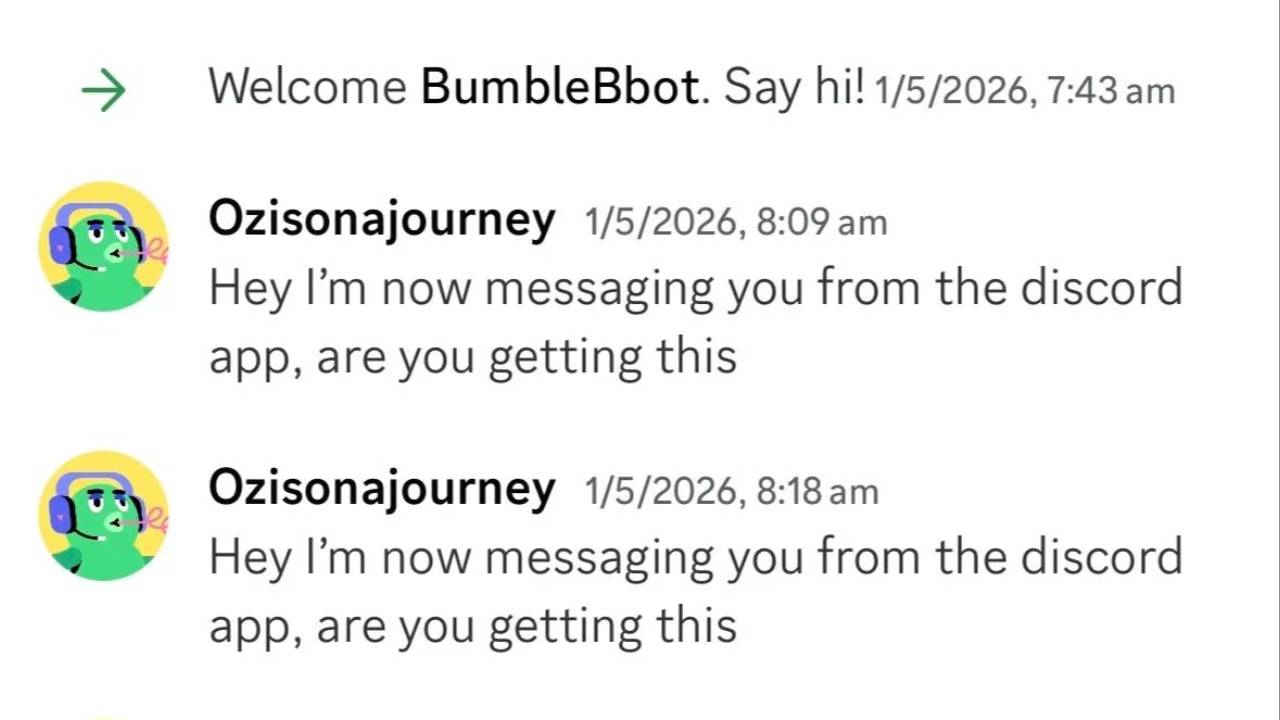
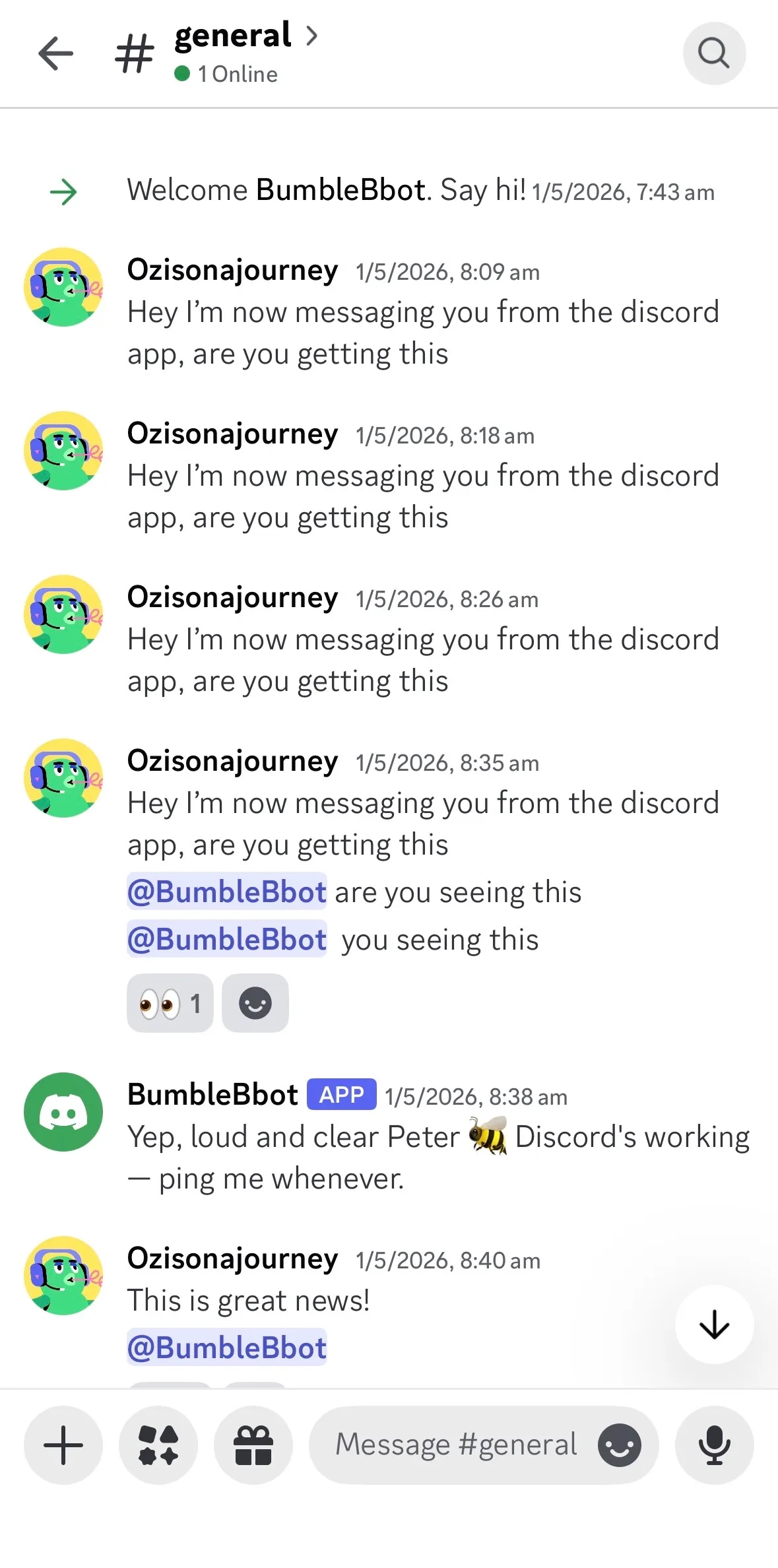
I messaged it through Discord.
Nothing.
I sent the same message again ten minutes later.
Then again.
Then again.
Four times in half an hour, a grown man typing “Are you getting this?” into an empty channel like a dad testing a walkie-talkie.
Then, at 8:38 a.m., a reply:
Yep, loud and clear Peter 🐝 Discord’s working. Ping me whenever.
I know how this sounds.
But it felt like a birth.
Years of hearing about the promise of AI, suddenly alive in one line, typed to me by name, by a machine sitting in the corner of the room.
I named the agent BumbleB, after my favourite four-legged friend.
It ran on a Mac mini in the corner of my office and communicated with me through Discord.
It cleaned up my email.
I fed it my stock portfolio, and it gave me weekly analysis, spotted patterns and flagged adjacent trades worth investigating.
It felt nothing like opening ChatGPT and asking a question.
It remembered context, completed tasks and acted on my behalf.
It felt persistent.
You need to know something about me here.
When I get into something, you are going to hear about it.
Invisalign.
Jiu-jitsu.
Blood panels.
Kriya.
I can be quiet for long stretches, but when I find a thing, I do not adopt it.
I evangelise it.
And I usually drag a few people along for the ride.
For the past few months, my thing was agents.
More specifically, my agent.
Ask anyone who has had dinner with me. They have met BumbleB, whether they wanted to or not.
Eight months ago, I wrote an essay called Small Business Sucks.
The argument was simple.
Most small-business owners do not own a business.
They own a job.
If you cannot disappear for 30 days and the company still runs, you do not own a business.
You work for one.
I believed agentic AI would finally change that.
A three-person company could eventually operate with the capability of one a hundred times its size.
BumbleB was me testing my own prediction.
For three weeks, it looked like I was right.
Then I Moved House
I unplugged the Mac mini, drove it to the new place and plugged it back in.
BumbleB never spoke again.
“Ping me whenever,” it had said.
Something had broken between Discord and the agent.
The intelligence was still there, sitting on the hard drive, ready to work.
The system around it was not.
One piece of technical plumbing failed, and the whole experience collapsed.
Here is the sentence that matters.
Fixing it would probably take half a day of troubleshooting the OpenClaw and Discord connection.
I still have not done it.
Not because I could not.
Because when I did the honest maths, a month of late nights had bought me an assistant that saved me a few hours a week.
Interesting hours.
Not life-changing hours.
The value did not justify the rebuild.
My robot died, and I did not care enough to resurrect it.
Try explaining that at the dinner tables you spent months converting.
That sentence taught me more about AI agents than the month of building did.
The Intelligence Wasn’t the Problem
The problem was everything around it.
My processes were undocumented.
My information lived in email, WhatsApp, spreadsheets and my own head, and BumbleB could see almost none of it.
Permissions expired.
Integrations broke.
And because I did not completely trust it, I checked every output anyway.
The agent was supposed to remove work.
Instead, it created a new job:
Managing the agent.
Walk into most small businesses today and you will find the same story.
Impressive demos on the laptop.
The founder still replying to emails, chasing invoices and writing social posts at midnight.
AI has entered the business.
It has not rebuilt the business.
So was Small Business Sucks wrong?
No.
It was early.
Which, as any investor will tell you, is often a polite way of saying wrong about timing.
The Unit I Got Wrong
Do I still believe three people will run hundred-million-dollar operations?
Yes.
But I had the unit of progress wrong.
The mistake is trying to build an autonomous employee.
The opportunity is to build an autonomous process.
Do not tell an agent:
“Run my marketing.”
Tell it:
“When a podcast episode is published, pull out the strongest ideas, draft three posts and one email, then send everything to me for approval.”
Do not tell it:
“Manage my leads.”
Tell it:
“When an enquiry arrives, extract the contact details, categorise the opportunity, draft a response, update the CRM and alert me when the value exceeds $5,000.”
One has unlimited ambiguity.
The other has a trigger, a workflow and a human at the end of it.
Not unlimited autonomy.
Bounded autonomy.
One process.
One outcome.
One point of approval.
The Question on the Bedroom Wall
Here is what the Mac mini asks me every morning:
Will half a day untangling a broken connection buy me more life than half a day doing the actual work?
Writing this essay, for example.
Is the juice worth the squeeze?
This morning, the answer was no.
You are reading what I did instead.
I am writing this in the bedroom, by the way.
The Mac mini is dangling right there behind the television while I type.
The evangelist and his dead gospel, staring each other down.
But the day the answer flips, BumbleB is not coming back as my digital employee.
It is coming back as my digital process.
One job:
Every time a podcast episode goes live, turn it into the week’s content and put it on my desk for sign-off.
Nothing else.
If it performs that one job reliably for 90 days, it earns a second one.
That is how the agent revolution will actually arrive.
Not as one magical hire you hand the keys to.
One reliable process at a time.
Then another.
Then another.
So the question is not:
How do I automate my entire business?
It is:
What is the first process in my business that could run reliably without me?
And when you find it:
Is the juice worth the squeeze?
BumbleB asked whether my business could run without me. There is a bigger question underneath it: is your life actually pointed where you want it to go? The Vision Crisis Diagnostic answers it in five minutes. Free.