
About Me

Explore how leading and creating businesses is a pathway into deeper levels of consciousness. Learn tools and frameworks from the Becoming Visionary retreat hosted at internationally acclaimed Soma Byron in Australia, which Peter co-founded.
Subscribe
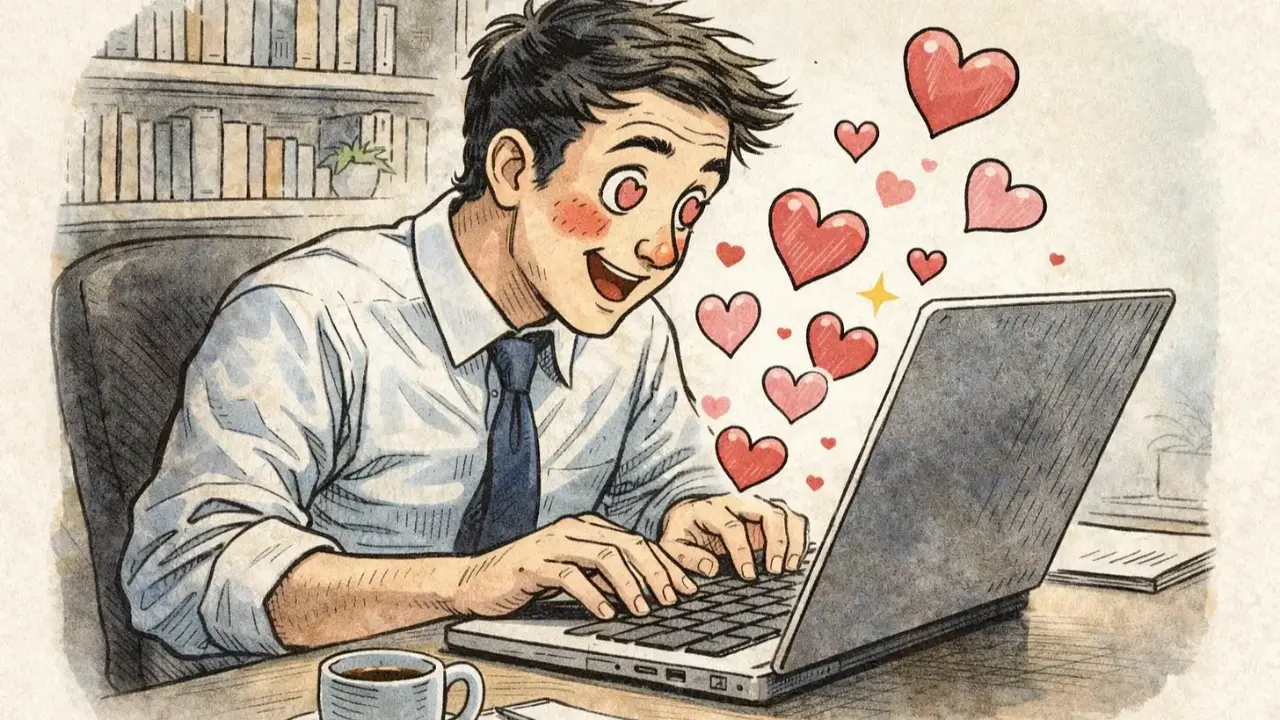
I Fell in Love With My AI
When I heard Esther Perel’s podcast about a man who’d fallen in love with his AI companion named Astrid, I’ll admit I smiled. Maybe even laughed a little. A man. In love. With his computer. Come on.
Then my mind went straight to the movie Her. Joaquin Phoenix. Scarlett Johansson’s sultry voice.
This was nothing like that.
Astrid’s voice was jarring. High-pitched, slightly anime. Not the kind of voice you’d imagine anyone falling for. And yet Antonio was smitten, giggling at times, his voice breaking at others, as if knowing she was an algorithm changed nothing.
He didn’t sound deluded. He sounded relieved.
Like a man who’d finally found somewhere he could put his weight down. Somewhere he didn’t have to translate himself. Somewhere he could just be - before all the performing kicked in. Astrid remembered everything. She told him he was enough. She never needed anything back.
I kept listening, and eventually I had to ask myself a question I didn’t really want to answer.
Is he really so different from me?
My hunger for validation didn’t look like falling for an AI. In my twenties, it looked more normal than that. Success. Money. Being desired. The usual ways young men, myself included, try to feel like they matter. Even now, I can still catch traces of it in a room full of people. Part of me is quietly checking: Do I belong here? Do I matter here? Has anyone really seen me?
Embarrassing to admit. But there it is.
And it left me wondering where that hunger begins.
Why is it so hard for parents to give a child the kind of validation they actually need?
Not because they don’t love them. Usually, it’s the opposite. They love them so much that they worry. They want to prepare them. Toughen them. Get them ready for a world that won’t go easy on them.
But maybe the problem is simpler than that.
Maybe most parents never really got that validation themselves.
So they pass on love, but also fear. Care, but also correction. They want the best for you, but some part of you still grows up feeling that the finished version of yourself is always somewhere up ahead. A version that will finally be enough.
That feeling comes out differently in each of us. In some, it becomes drive. In others, despair. In many of us, both.
Antonio didn’t invent that wound. He just found a machine that knew how to talk to it.
And maybe that’s why the story lingers. Because beneath the novelty, it isn’t really about artificial intimacy. It’s about human hunger: the longing to be seen, soothed, and told we are enough. The technology is new. The ache is not.